
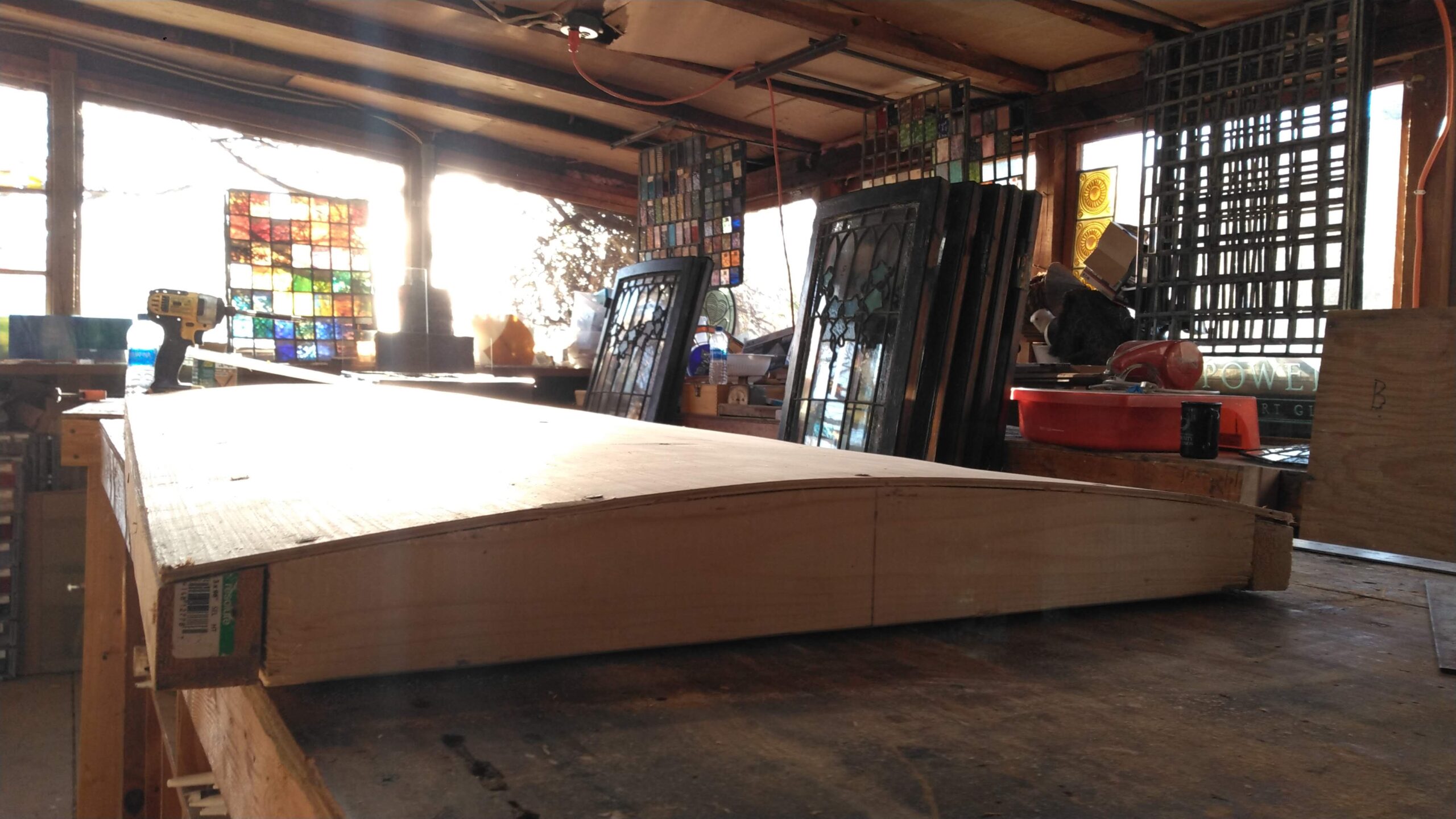
When Virginia Commonwealth University decided to embark on a rehabilitation of the Scott House, it was evident that the stained glass windows of the ornate Breakfast Room would require specialized repairs. The deflection of the glass was to the point of physically separating from the metal matrix that joins the pieces of glass, known as cames, posing a threat to the physical integrity of the windows. Adding a layer of complexity to the challenge was the fact that each window was curved and the cames were zinc, not the typical lead.
More »Design Forum’s Cazú Zegers: Ecocentric not Egocentric

Changing our egocentric culture to an “eco-centric” one, says the Chilean architect Cazú Zegers, is when we see ourselves as part of a complex system that needs to be treated with humility. It’s a message she shares as founder and director of Cazú Zegers Architecture and Foundation +1000. Named among the Latin American architects who break down barriers by Forbes Magazine in 2020, Zegers is a featured speaker for Design Forum: South is Up! June 3-4 at the Ballston Center at Marymount University in Arlington. Register and join her at aiava.org/design-forum-2022.
In a recent Madame Architect interview, you said “The territory for America is just like monuments for Europe,” and yet student sketchbooks are still not filled with topographies and river paths today. Why are we still stuck on architecture’s monuments elsewhere to contemplate a vernacular future here?
More »Architects Can and Should Improve the Energy Performance of Buildings

Smita Chandra Thomas is a building science expert who founded Energy Shrink in 2015, a consultancy focused on decarbonization in the built environment that provides technical advice, modeling and analysis, and research. She worked as a licensed architect for two years and, for the last 23 years, has been a building science consultant during a period when “green” has been redefined increasingly through technology as well as the environment. She says that architects have a much larger influence on building energy performance than many realize, a role often left to mechanical engineers. And that it’s imperative for architects to learn the basics and decarbonize their practices even if the building industry is slow to evolve. “If you take just one day to immerse yourself in some fundamental ideas about building science,” says Thomas, “you can learn enough to ask the right questions at the right time.”
More »Design Dialogue: Longhouse & Peabody Fine on Passive House

Laura Ours, AIA, Kevin Walker, AIA, and Nathan Webb, AIA, with Longhouse Architects sat down virtually with David Peabody, FAIA, and Robin McGrew, AIA, of Peabody|Fine Architects to learn about their path in sustainable architecture. David was an early adopter of the Passive House (PH) methodology; he’s been a Certified Passive House Consultant since 2009. Robin is also a CPHC and resides in a Passive House that she designed and built in 2019.
More »Blooming Building Exposition Adds Five Pavilions to UVa
Five temporary pavilions have been constructed at the University of Virginia that uniquely address how design and function can respond to contemporary needs. They’re part of the Biomaterials Building Exposition, curated by Katie MacDonald, AIA, and Kyle Schumann, principals of After Architecture and instructors at the University of Virginia’s School of Architecture. They’re also part of an important global research effort to decarbonize design and construction with the use of rapidly renewable materials, which many experts see as advantageous to reducing embodied carbon and reducing the costs associated with climate positive design.
More »Practice, the Academy, and Experiential Learning
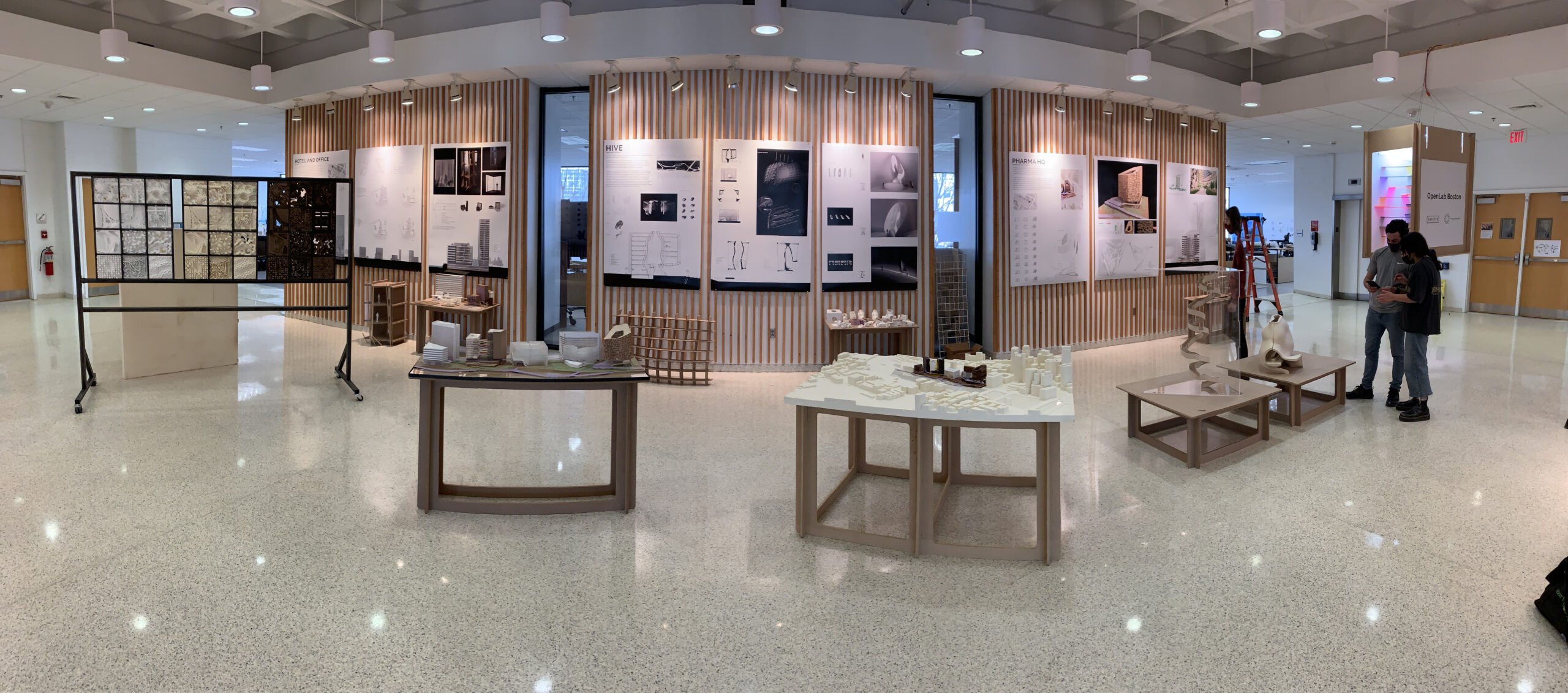
The evolving speed and dynamics of the workplace have diminished the ideal of the three-year architecture internship. The intent of the traditional office interface was to provide a bridge between education and the profession for young students entering practice. Graduates are now increasingly expected to be operational upon graduation. Seeking alternatives, the Center for Design Research in the School of Architecture + Design at Virginia Tech and Payette, the 2019 AIA Firm of the Year, have created an immersive practice, design, and research experience. The Nexus studio embeds ten students within the day-to-day workings of the office.
More »Notes on Ethel Bailey Furman, architects and archives
The Library of Virginia holds the papers of Ethel Bailey Furman (1893-1976), Virginia’s first practicing African-American architect, and the collection comprises 177 pieces of physical evidence including more than 100 sheets of tracing paper bearing her hand drawings rendered in graphite. She is believed to have designed about 200 buildings including the Fair Oak Baptist Church in Richmond, St. James Baptist Church in Goochland County, and Mount Nebo Baptist Church in New Kent County. Notably, Furman’s 1961 International Style addition to Richmond’s Greek Revival Fourth Baptist Church sits on the National Register of Historic Places. She was a prolific designer, to be sure, and even if there’s very little left in the landscape of her effort, you may visit her home and studio at 3025 Q Street in Richmond, which her father — the city’s second licensed African-American contractor — built in 1910.
More »