
William McDonough + Partners’ (WM+P) Project Legacy at Universidad EAN in Bogotà, Colombia is designed to illustrate the potential of Cradle to Cradle® and the circular economy. The team designed this school to be like a living, breathing organism, native to and a part of its environment — its colorful façade captures the exuberance inherent in Colombian culture.
More »At the Intersection of this Moment and the Future: Innovation + Flexibility at Flint Hill School
Bowie Gridley’s design of the new Peterson Middle School at Flint Hill School (FHS), a progressive independent school with 1,000 students located in Northern Virginia, embodies innovation, flexibility, and both the social/emotional and physical wellness needs of middle school students. With its spaces for creativity and experimentation and its incorporation of technology, it meets the school’s cutting-edge educational pedagogy with 21st century design and addresses the need for flexibility in a post-COVID world.
More »Charlottesville’s New Quirk Hotel Anchors a Main Street in Flux
Breathless encomiums about Charlottesville’s renaissance over the past decade are easy to understand. There’s been lots of housing and commercial infill, especially along stretches of road between town and gown outposts. The county’s infrastructure projects ringing the city have started to address (but still not solve) the traffic congestion. The newly completed South Lawn and hospital complex expansion projects are marvels of civil engineering. The Rotunda recently reemerged after a multimillion-dollar renovation as a model of thoughtfulness and probity. In parts of town where tuition-paying parents might have a Coke and a burger, things are generally looking leafier and cleaner.
More »Notes on the Williamsburg Experiment
There’s an irony in writing a true account about the living history museum at Colonial Williamsburg. Its eponymous foundation and its curators have grappled with the same two questions for generations: Whose histories do we tell and how shall we recreate them? Today, Williamsburg faces a new set of questions beyond the facts recorded in the governours’ ledgers: Whose truths do we tell and how shall we present them in concert together, especially in light of the 1619 Project, the Black Lives Matter movement, and Critical Race Theory, whose progenitors demand more than new lines of inquiry. They demanded action. Williamsburg has made clear efforts to juggle archaeology with interpretation, and it has also attempted to address the indictment of sophistry among its critics, which are legion. But, can the sites of Williamsburg’s 301 acres respond to our moment now?
In our post-vaccination world, Colonial Williamsburg is worth revisiting this summer, as I did in June—not for what its evidence reveals about Colonial America, but for our opportunity to change the course of what I’ll call the Williamsburg Experiment, ongoing for more than 380 years.
More »Design for Student Health and Wellbeing at UVA

As students return to campus amid continued pandemic uncertainty, awareness of the importance of good health — physical, mental, and emotional — is intensifying. Attending college can be stressful under any circumstance. Aside from the rigors of academic life, it is often a student’s first time living away from home. For universities looking to develop health programs to address the needs of today’s students, the new Student Health & Wellness Center at the University of Virginia presents a model that expands traditional health services and facilitates a new approach to student wellness with preventative practices and strengthened community connections.
More »New Community Health Center Transforms a Kigali Community
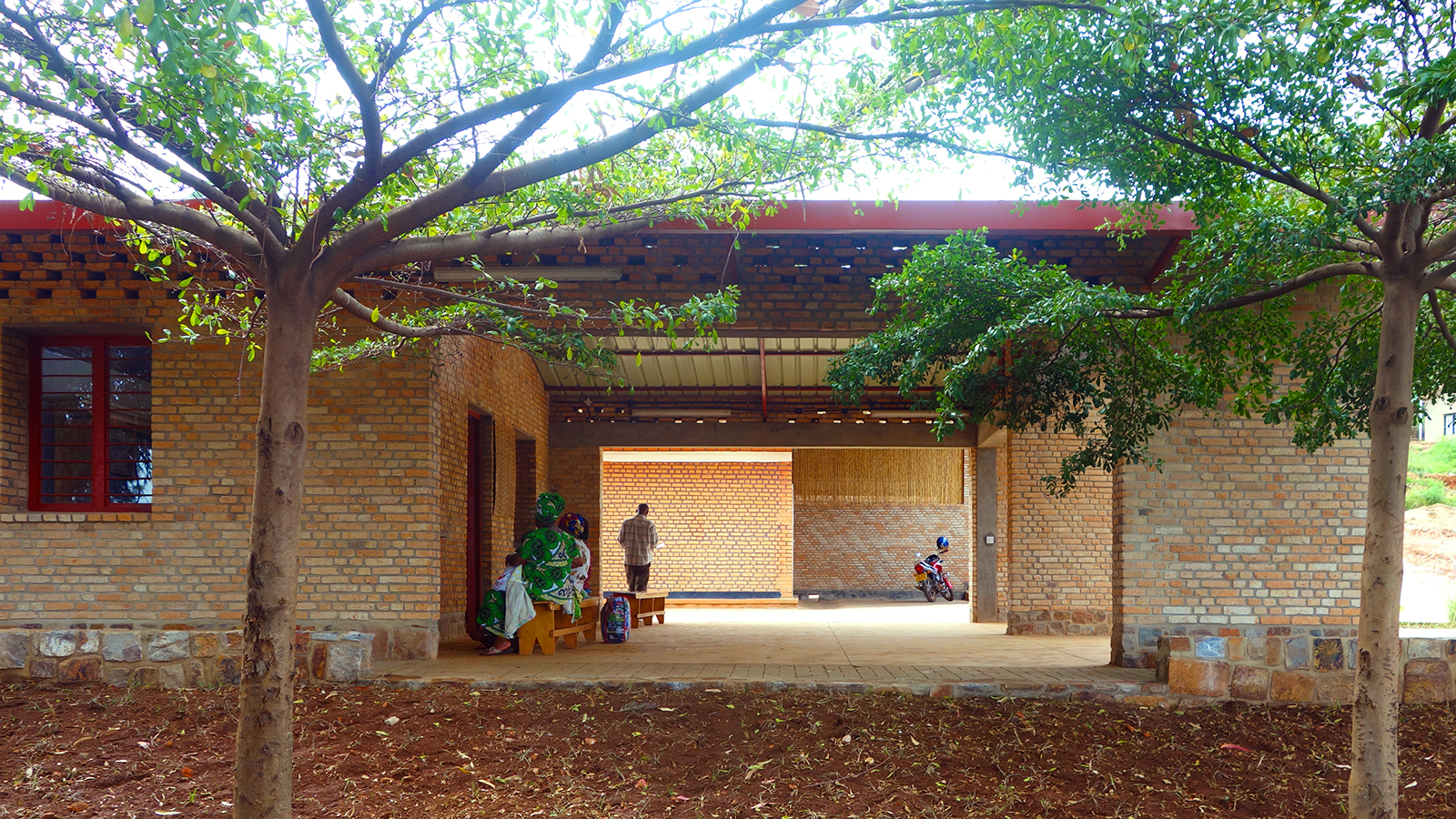
Just outside metropolitan Kigali, the Masoro Health Centre by the nonprofit General Architecture Collaborative (GAC) is part of a multi-decade push by the Rwandan government to improve its healthcare system, which includes clinics in underserved regions. GAC’s center administers curative and maternity services, as well as preventative care, for more than 20,000 residents within a 10 square-mile area in the foothills of the Virunga Mountain Range that define the borders of Rwanda, Uganda, and the Democratic Republic of Congo. The center spreads across multiple buildings, all modest in scale, separated by services and functions to facilitate queuing and create a restful campus atmosphere. In addition to community health, the center’s architects also addressed the ecological and economic health of the region by identifying local materials and training laborers and students from the University of Rwanda in building trades to complete the 1.3 acre campus.
More »A DC Rec Center Where Blue and Green Infrastructures Meet
Before the advent of air conditioning, Washingtonians endured hot summers as the northernmost southern American city. They coped by moving a little slower for a few months and hopping the trolly to some of the glades dotting the city’s periphery like Glen Echo, Hains Point, Oxen Run, or along Sligo Creek. That periphery is still marked by 40 boundary stones, the nation’s oldest federal monuments, and a network of forts, parks, and recreation centers that serve as neighborhood hubs. Marvin Gaye Recreation Center is the newest public facility in the District, completed in 2018 and situated just 1,000 feet from the easternmost boundary stone.
More »