
Equity, diversity, and inclusion have been adopted into workplace culture and studio programming. But, justice — as a principle and directive — has catalyzed the effort for fundamental awareness and evident change within architecture. Why is justice a necessary design ethic? Virginia’s preeminent voices in equity, diversity, and inclusion weigh-in on why this question matters. As part of this series, educator, researcher, and member of AIA Virginia’s J.E.D.I. Committee, Kendall Nicholson, Assoc. AIA, talks about empathy and responsibility as the foundations of justice. “My hope,” he says, “is that architects and designers continue to develop their senses in the area of racial equity and advocate for the reallocation of resources based on history and systems.”
More »A Simulated Thatched Roof
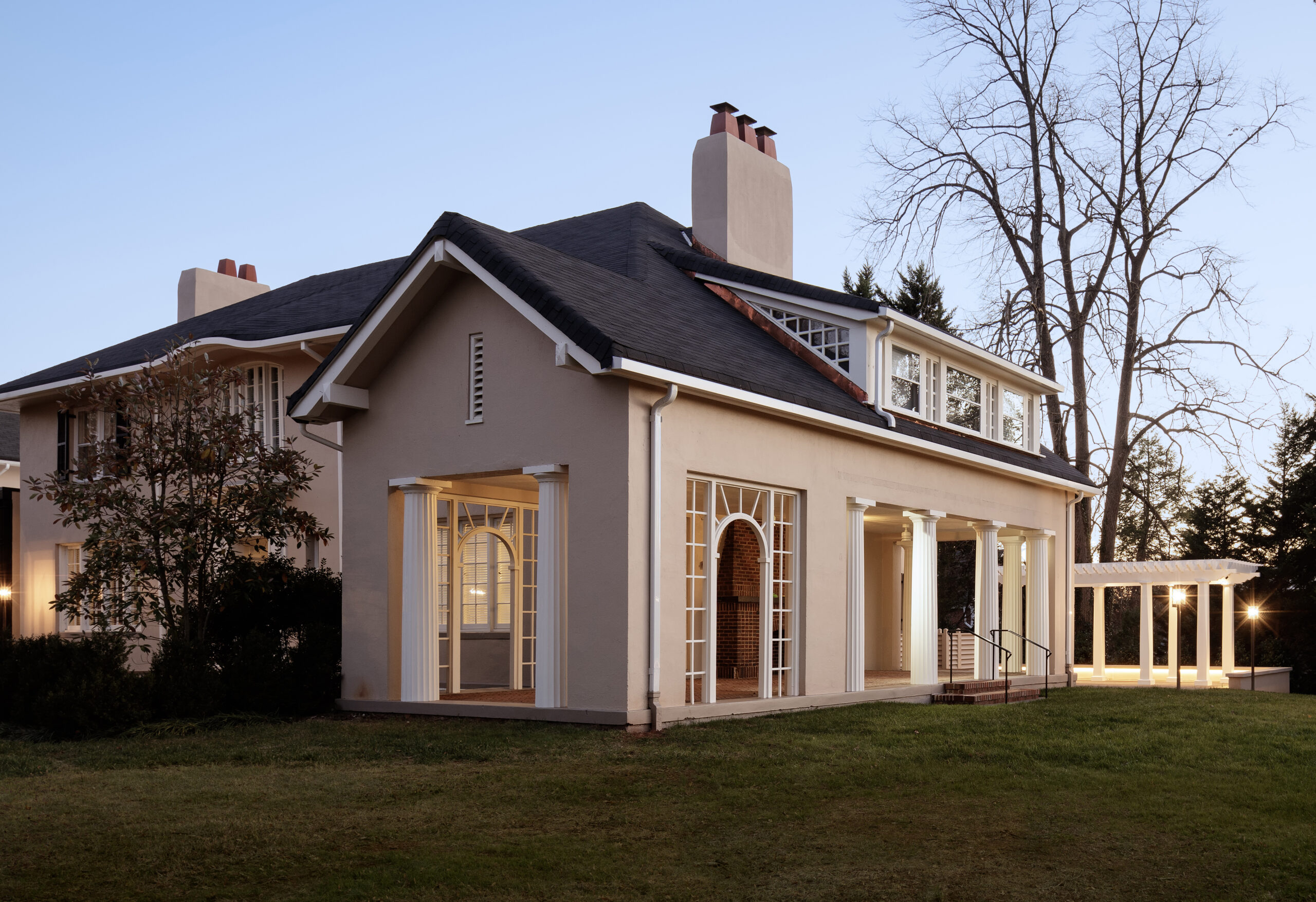
An odd feature caught the eye of the team at Glave & Holmes Architecture while rehabilitating the historic Brody Jewish Student Center in Charlottesville. This very artistic house on University Circle, historically the domain of UVA professors, was roofed with ordinary asphalt shingles, but the hips and overhangs were softly curved, lending the house a very distinctive appearance in this otherwise safely Jeffersonian Charlottesville neighborhood.
More »Design for Student Health and Wellbeing at UVA

As students return to campus amid continued pandemic uncertainty, awareness of the importance of good health — physical, mental, and emotional — is intensifying. Attending college can be stressful under any circumstance. Aside from the rigors of academic life, it is often a student’s first time living away from home. For universities looking to develop health programs to address the needs of today’s students, the new Student Health & Wellness Center at the University of Virginia presents a model that expands traditional health services and facilitates a new approach to student wellness with preventative practices and strengthened community connections.
More »New Community Health Center Transforms a Kigali Community
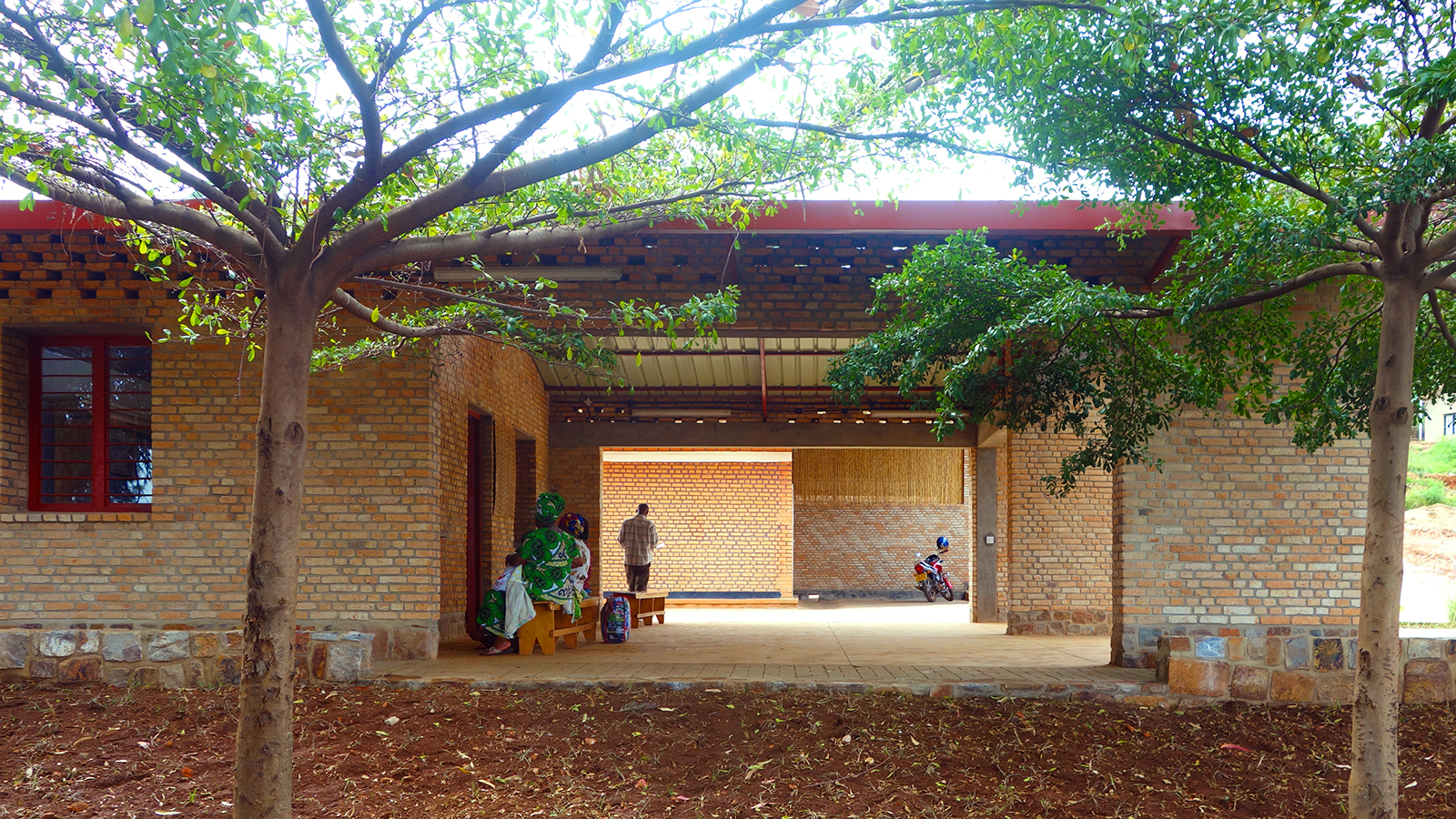
Just outside metropolitan Kigali, the Masoro Health Centre by the nonprofit General Architecture Collaborative (GAC) is part of a multi-decade push by the Rwandan government to improve its healthcare system, which includes clinics in underserved regions. GAC’s center administers curative and maternity services, as well as preventative care, for more than 20,000 residents within a 10 square-mile area in the foothills of the Virunga Mountain Range that define the borders of Rwanda, Uganda, and the Democratic Republic of Congo. The center spreads across multiple buildings, all modest in scale, separated by services and functions to facilitate queuing and create a restful campus atmosphere. In addition to community health, the center’s architects also addressed the ecological and economic health of the region by identifying local materials and training laborers and students from the University of Rwanda in building trades to complete the 1.3 acre campus.
More »A DC Rec Center Where Blue and Green Infrastructures Meet
Before the advent of air conditioning, Washingtonians endured hot summers as the northernmost southern American city. They coped by moving a little slower for a few months and hopping the trolly to some of the glades dotting the city’s periphery like Glen Echo, Hains Point, Oxen Run, or along Sligo Creek. That periphery is still marked by 40 boundary stones, the nation’s oldest federal monuments, and a network of forts, parks, and recreation centers that serve as neighborhood hubs. Marvin Gaye Recreation Center is the newest public facility in the District, completed in 2018 and situated just 1,000 feet from the easternmost boundary stone.
More »Gehrung+Graham Design Durable Net-Zero Houses for this Millennium
Homes that are certified or recognized as “passive” to achieve net-zero status produce as much energy as they consume, and consume energy in efficient ways thanks to design strategies that take advantage of light, heat, circulation, and airflow to be uniquely sustainable. The Passive House Institute US (PHIUS) has certified or pre-certified more than four million square feet of projects, most of them in the last five years. Virginia is home to 20 certified or pre-certified projects, which must secure third-party quality assurance, meet the Department of Energy’s standard for net zero energy efficiency, and gain recognition from the Environmental Protection Agency for indoor air quality, among other qualifications.
More »Energy and Water Define Sustainable Growth for Virginia Beach
On Feb. 24, 2021, the Hampton Roads Association for Commercial Real Estate (HRACRE) hosted a virtual event on Virginia’s burgeoning offshore wind future, spearheaded by Dominion Power’s $300 million pilot project consisting of two turbines 27 miles off the coast of Virginia Beach. Reliability testing last year confirmed the turbines’ 12-megawatts of power, which will ostensibly provide energy for an estimated 3,000 homes. Virginia Business reported it will include up to 190 turbines capable of powering 650,000 homes over the next five years. By 2040, more than 200,000 individuals are expected to move to the Hampton Roads region, which the Urban Land Institute called the fastest growing destinations for Millennials.
More »